Venice’s Hidden Gems: Where Beauty Meets Protection
Have you ever walked through a city that feels like a dream? Venice isn’t just gondolas and crowds—it’s quiet canals, untouched islands, and protected lands where nature and history thrive. I discovered spots most tourists miss, where every corner is Instagram-perfect and deeply preserved. These places aren’t just scenic—they’re safeguarded for the future. Let me take you beyond the postcard views to the Venice few truly see.
The Venice Beyond the Postcard
When most people think of Venice, they picture St. Mark’s Square bustling with visitors, gondoliers calling out along the Grand Canal, and café tables spilling onto narrow alleyways. This is the Venice of guidebooks and travel reels—the vibrant, iconic heart of the city. Yet, just a short boat ride away lies another Venice, one defined not by crowds but by stillness. This quieter side reveals itself in the soft lap of water against moss-covered stone, the distant cry of a seabird over tidal marshes, and the sight of centuries-old brickwork softened by time and salt air. It is a Venice that breathes, where the rhythm of daily life unfolds slowly, shaped by tides and tradition rather than tourist timetables.
This hidden Venice exists within a network of protected areas carefully preserved to maintain the delicate balance between human presence and environmental sustainability. These zones are not closed off—they are accessible, inviting, and deeply enriching. They include uninhabited islets, restored wetlands, and working agricultural islands that have resisted the pressures of overdevelopment. Unlike the more famous landmarks, these places offer a sense of discovery, a chance to experience Venice as both a living cultural landscape and a fragile ecosystem. Travelers who seek them out are rewarded not with spectacle, but with authenticity—moments of connection with a city that continues to evolve while honoring its past.
What makes these areas so special is their dual role: they serve as sanctuaries for biodiversity and as living museums of Venetian heritage. Salt marshes that once acted as natural flood barriers now shelter rare bird species. Abandoned monasteries stand quietly amid rewilding vegetation, their bell towers still visible above the trees. Even the cultivated fields of Sant’Erasmo, known as the “garden of Venice,” are part of this protected fabric, growing artichokes and grapes using traditional methods passed down for generations. By stepping into these spaces, visitors engage with a version of Venice that is not frozen in time, but actively cared for and thoughtfully maintained.
What Are Venice’s Protected Areas?
The term “protected area” in the Venetian context refers to legally designated zones where environmental, cultural, or historical preservation takes precedence over commercial development. These areas are managed under frameworks established by Italian national law, regional authorities, and international agreements, most notably the UNESCO World Heritage designation that covers the historic city and much of the surrounding lagoon. While Venice itself was inscribed as a World Heritage Site in 1987, the protection extends far beyond the central islands to include vast stretches of lagoon, tidal flats, and minor islands that play a crucial role in maintaining the city’s ecological and structural integrity.
Among the most significant protected zones are the northern and southern lagoon wetlands, which serve as natural buffers against erosion and storm surges. These marshlands are home to a variety of plant and animal species adapted to brackish water conditions, including eelgrass beds that stabilize the seabed and provide nurseries for fish. The protection of these habitats is not merely an environmental concern—it is directly linked to the survival of Venice itself, as healthy wetlands reduce the impact of high tides and help prevent subsidence. In addition, several smaller islands such as Torcello, Mazzorbo, and La Certosa are subject to strict conservation guidelines that limit construction, regulate visitor access, and prioritize restoration over modernization.
UNESCO’s role has been instrumental in shaping preservation policies, particularly in response to threats like mass tourism, climate change, and large cruise ship traffic. In recent years, the organization has urged Italian authorities to implement stronger measures to protect the lagoon’s ecological balance, including restrictions on dredging, anchoring, and industrial activity. Local agencies such as the Venice Lagoon Authority (Magistrato alle Acque) and the Lagoon Conservation Project work hand-in-hand with scientists, urban planners, and community groups to monitor water quality, restore salt marshes, and manage sustainable tourism. Their efforts reflect a growing recognition that Venice cannot be preserved as a monument frozen in time, but must be nurtured as a dynamic, living system.
The success of these protections lies in their ability to balance access with responsibility. Visitors are welcome in most protected areas, but with clear expectations: stay on marked paths, avoid disturbing wildlife, and respect local customs. This model ensures that tourism remains a force for awareness and support rather than degradation. For the discerning traveler, especially those who value meaningful experiences over checklist sightseeing, these zones offer a deeper understanding of what it means to truly care for a place.
Why These Places Are Instagram-Worthy
There is a reason why certain corners of Venice seem tailor-made for photography. The natural light here is unlike anywhere else—soft, reflective, and constantly shifting with the movement of water. In the early morning, when mist rises off the lagoon, the world takes on a dreamlike quality. Colors become more vivid: the pale pink of a weathered stucco wall glows against a blue-gray sky, the green of reeds swaying in the breeze appears almost luminous, and the occasional flash of a kingfisher’s wing adds a streak of electric blue. These are the moments that stop you in your tracks, the ones you instinctively reach for your phone to capture.
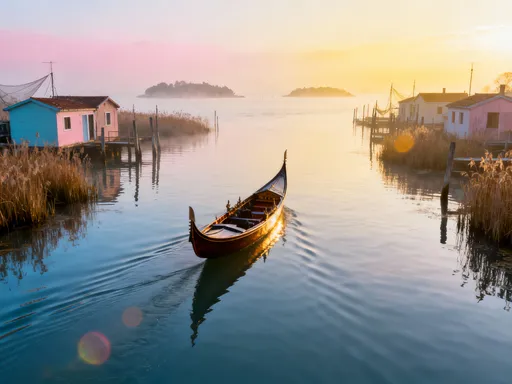
What makes these protected areas especially photogenic is their authenticity. Unlike the more polished, heavily trafficked parts of the city, these spaces have not been staged for visitors. There are no souvenir shops, no neon signs, no crowds jostling for the perfect angle. Instead, you find scenes that feel timeless: a wooden fishing boat tied to a crumbling dock, its nets drying in the sun; a stone archway draped in ivy, leading to nowhere; a flock of flamingos wading through shallow waters at dawn, their pink feathers catching the first light. These images resonate because they tell a story—not of perfection, but of resilience and quiet beauty.
Photographers and casual snap-takers alike are drawn to the contrast between decay and renewal that defines these landscapes. A collapsed brick wall overtaken by wildflowers speaks of nature’s quiet reclamation. An ancient wellhead, half-buried in sand, hints at forgotten lives. These visual narratives are powerful because they invite reflection. They remind us that beauty does not require polish—it often flourishes in imperfection. For social media users, sharing such moments is not just about aesthetics; it’s about bearing witness to places that deserve attention and care.
Moreover, the solitude found in these areas enhances the photographic experience. Without the pressure of crowds, you can take your time—wait for the light to shift, adjust your composition, or simply absorb the scene before lifting your camera. This mindfulness translates into more meaningful images, ones that capture not just what a place looks like, but how it feels. And when shared responsibly—without geotagging sensitive locations or encouraging reckless behavior—these photos can inspire others to visit with respect and intention.
The Best Times and Ways to Visit
To experience Venice’s protected areas at their most enchanting, timing is essential. The golden hours—shortly after sunrise and before sunset—offer the best light for photography and the greatest sense of peace. During these times, the lagoon is often still, the air crisp, and the colors at their most vivid. Early mornings also allow you to beat the day-trippers who arrive on ferries from the mainland or cruise ships docking near San Marco. By starting your exploration at dawn, you may have entire islands to yourself for a precious hour or two, a rare luxury in one of the world’s most visited cities.
Seasonal timing matters just as much. While summer brings long days and warm weather, it also brings peak crowds and higher temperatures, making outdoor exploration less comfortable. The shoulder seasons—late spring (May to early June) and early autumn (September to October)—offer the ideal balance: milder weather, fewer tourists, and lush natural scenery. During these months, wildflowers bloom along the dikes, migratory birds pass through the marshlands, and the light has a soft, golden quality that enhances every view. Winter, though colder, has its own quiet charm, with frost-kissed reeds and empty pathways that invite contemplative walks.
When it comes to transportation, the most sustainable and authentic way to explore is by public vaporetto (water bus). Lines 12, 13, and 14 connect the main islands to the northern and southern lagoon, stopping at lesser-known destinations like Treporti, Cavallino, and the northern edges of Burano. These routes are less frequented by tourists and offer glimpses of everyday Venetian life—fishermen unloading their catch, families walking to church, gardeners tending small plots of land. For those comfortable with cycling, bike paths on the mainland near Mestre and Jesolo provide access to lagoon viewpoints and nature trails, though direct access to most protected islands remains by boat.
Walking is the best way to engage with these spaces once you arrive. Many of the smaller islands have well-marked footpaths that guide visitors through sensitive habitats without causing damage. Sturdy, comfortable shoes are recommended, as some paths can be uneven or slippery. It’s also wise to bring water, a light snack, and a reusable bag—plastic waste is a serious concern in the lagoon, and carrying out what you bring in is a small but meaningful act of respect. Above all, move slowly. These places are not meant to be rushed through. They reward patience, observation, and a willingness to simply be present.
Top Protected Spots You Shouldn’t Miss
Among the most rewarding destinations in Venice’s protected network is Sant’Erasmo, a long, slender island in the northern lagoon often referred to as the “garden of Venice.” Here, fertile soil and a mild microclimate support centuries-old agriculture, with fields of artichokes, asparagus, and white mulberries stretching between narrow canals. The island has no grand palaces or tourist shops—just quiet lanes, family-run farms, and a peaceful rhythm of life shaped by the seasons. A walk along its perimeter path offers views of the lagoon on one side and cultivated plots on the other, with the distant skyline of Venice shimmering on the horizon. Visitors can stop at a local agriturismo to taste fresh produce or enjoy a simple meal of grilled fish and local wine.
Another gem is the quieter side of Burano, beyond the brightly painted houses that attract crowds. While the main village is famous for its lace-making and vibrant facades, the northern and western edges of the island blend into marshland and tidal flats that are part of a protected bird sanctuary. Walking beyond the central square, you’ll find narrow canals where fishing boats bob gently, and wooden walkways that lead into reed beds alive with bird calls. At low tide, you might see herons stalking the shallows or sandpipers darting across exposed mudflats. This part of Burano feels worlds away from the postcard image, offering a more intimate, natural encounter with the lagoon.
The northern lagoon marshlands, accessible via vaporetto to Treporti or Cavallino, are another hidden treasure. These expansive wetlands are crucial for flood control and biodiversity, serving as nurseries for fish and resting spots for migratory birds. Boardwalks and observation points allow visitors to explore without disturbing the ecosystem. On a clear morning, the sight of sunlight filtering through tall reeds, casting long shadows across the water, is unforgettable. The air carries the scent of salt and damp earth, and the only sounds are the wind and the occasional splash of a jumping fish. It is a place of stillness and renewal, where the natural world asserts its quiet dominance.
Torcello, one of the oldest inhabited islands in the lagoon, offers a different kind of solitude. Once a thriving settlement, it was largely abandoned due to malaria and shifting trade routes, leaving behind ancient churches, moss-covered ruins, and wide open spaces. The Cathedral of Santa Maria Assunta, with its 11th-century mosaics, stands as a testament to the island’s former importance. Today, Torcello is a place of quiet contemplation, where visitors can wander among stone pathways, sit by a tranquil garden, or enjoy a meal at a small family-run restaurant. Because it lies off the main tourist circuit, it retains a sense of mystery and timelessness.
Each of these places offers something unique, yet they share a common thread: they are preserved not for spectacle, but for continuity. They remind us that Venice is more than a city—it is a complex, interwoven landscape of water, land, and human care.
How Tourism Can Help, Not Harm
Tourism, when practiced mindfully, can be a powerful ally in conservation. The presence of respectful visitors brings attention, economic support, and a sense of shared responsibility for preserving these fragile places. When travelers choose to explore protected areas with care—staying on paths, avoiding litter, and supporting local initiatives—they contribute to a culture of stewardship. Small actions matter: refraining from picking plants, not feeding wildlife, and choosing eco-friendly transport all help maintain the ecological balance.
Supporting local businesses that operate sustainably is another way to make a positive impact. On islands like Sant’Erasmo and Mazzorbo, family-run farms and small eateries offer fresh, seasonal food grown or sourced nearby. A simple plate of cicchetti—Venetian tapas—made with local seafood, vegetables, and wine not only provides a delicious meal but also sustains the agricultural traditions that are part of the region’s heritage. These businesses often reinvest in conservation efforts, whether by restoring farmland, reducing plastic use, or educating visitors about the environment.
Travelers can also participate in citizen science or volunteer programs that monitor bird populations, clean up shorelines, or assist with habitat restoration. While such opportunities may not be widely advertised, they are often available through local environmental groups or cultural associations. Even sharing photos and stories online—with care—can raise awareness. Using general location tags instead of exact coordinates helps protect sensitive sites from overcrowding while still inspiring others to appreciate them.
The goal is not to eliminate tourism, but to transform it into a force for good. By choosing to travel slowly, thoughtfully, and with respect, visitors become part of the solution. They help ensure that these places remain vibrant and protected for future generations, not just as scenic backdrops, but as living, breathing parts of Venice’s identity.
A Legacy Worth Preserving
The protected areas of Venice are more than scenic escapes—they are vital to the city’s survival and soul. They represent a commitment to balance: between past and future, human and nature, beauty and responsibility. These spaces remind us that true preservation is not about freezing a place in time, but about nurturing it with care and foresight. They are living testaments to centuries of adaptation, resilience, and communal effort.
For the thoughtful traveler, especially those who value depth over dazzle, these hidden gems offer a chance to connect with Venice on a deeper level. They invite us to slow down, to listen, to observe. They challenge us to see beyond the surface and recognize the intricate web of life and history that sustains this extraordinary city. In an age of fast travel and instant gratification, they offer a rare gift: the opportunity to be present, to witness, and to participate in something greater than oneself.
As we share our experiences—through words, images, or quiet reflection—we have a responsibility to do so with integrity. Let us celebrate these places not as commodities, but as treasures entrusted to our care. Let us visit with humility, leave no trace, and support the communities that steward them. In doing so, we honor not just Venice’s past, but its future. The beauty of these protected lands is not merely in their appearance, but in what they represent: a promise that with respect and intention, we can preserve wonder for generations to come.