You Won’t Believe What I Found in Frankfurt — Art Everywhere, Culture Alive
Frankfurt isn’t just banks and skyscrapers — I was shocked to discover how deeply art and culture pulse through the city. From hidden galleries to riverside museums, every corner tells a story. This isn’t your typical European check-in; it’s a vibrant blend of tradition and modern creativity. If you think Frankfurt’s all business, you’re missing the soul of the place. Let me show you the side most travelers overlook — authentic, immersive, and absolutely unforgettable.
First Impressions: Beyond the Skyline
Arriving in Frankfurt for the first time, many visitors are struck by the dramatic skyline dominated by glass towers and steel structures. It’s often compared to a European Manhattan, a bustling financial center where suits and briefcases outnumber artists and easels. This image, while accurate in part, only captures one facet of the city. Beneath the polished surface of corporate headquarters and international banks lies a thriving cultural ecosystem that defies expectations. As you step off the train at Hauptbahnhof or exit the U-Bahn at Willy-Brandt-Platz, subtle signs of artistic life begin to emerge — a mosaic embedded in a sidewalk, a bronze sculpture tucked beside a café, a mural stretching across the side of a historic building.
What becomes clear within hours of exploring is that Frankfurt refuses to be reduced to a single identity. The city embraces duality — modern and traditional, global and local, structured and spontaneous. In the heart of the banking district, you’ll find the Stock Exchange building standing just blocks away from the Alte Oper, a grand 19th-century concert hall restored to its former glory. This juxtaposition isn’t accidental; it reflects a deliberate effort to balance economic strength with cultural depth. The presence of art in public spaces signals a city that values expression as much as efficiency.
Even the layout of the city encourages cultural discovery. Wide pedestrian zones like Zeil and Goethestrasse, often associated with shopping, are lined with sculptures and seasonal art installations. Street performers add rhythm to the urban soundtrack, while small galleries nestle between boutiques and bakeries. These moments of creative surprise challenge the assumption that Frankfurt is merely a transit hub or a place to conduct business. Instead, they invite travelers to slow down, look closer, and recognize that culture here isn’t confined to museums — it’s part of daily life.
Museumsufer: Where Culture Lines the River
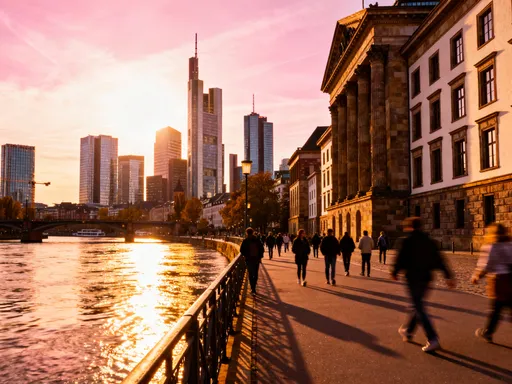
One of Frankfurt’s most remarkable cultural assets is the Museumsufer, or Museum Embankment, a stretch of the north bank of the Main River where over a dozen museums are clustered within easy walking distance. This concentration of cultural institutions is rare in Europe and unmatched in Germany, offering an unparalleled opportunity to immerse oneself in art, history, and science without ever needing to board a train or taxi. On a sunny afternoon, the area buzzes with locals strolling between museums, families picnicking on the grassy riverbanks, and tourists pausing to admire both the architecture and the views of the city skyline across the water.
At the heart of the Museumsufer stands the Städel Museum, widely regarded as one of Germany’s finest art collections. Its holdings span seven centuries, from early Renaissance masterpieces to contemporary works by living artists. The museum’s architecture itself tells a story — a neoclassical façade seamlessly integrated with a modern underground extension that houses rotating exhibitions and educational spaces. Visitors can spend hours wandering through galleries featuring works by Dürer, Rembrandt, Vermeer, and Monet, then emerge to find themselves just steps away from the Liebieghaus, a villa-turned-sculpture museum housing an exquisite collection of European and ancient sculptures dating back to 2500 BC.
Equally compelling is the German Film Museum, dedicated to the history and art of cinema. Interactive exhibits allow guests to step into the director’s chair, experiment with special effects, or explore the evolution of film technology. Nearby, the Museum of World Cultures presents ethnographic artifacts from Africa, Asia, and the Americas, curated with sensitivity and contextual depth. What makes the Museumsufer so accessible is not just its physical proximity but also its welcoming atmosphere. Many of the museums offer free or discounted entry on certain days, and the Frankfurt Card provides significant savings for travelers planning to visit multiple sites.
The river itself plays a vital role in the experience. Benches along the embankment invite reflection, while seasonal boat tours offer a unique vantage point of the museum row. In summer, open-air concerts and food markets transform the area into a cultural festival zone. The Museumsufer isn’t just a collection of buildings — it’s a living, breathing extension of the city’s creative spirit, where art flows as freely as the river it borders.
Hidden Galleries and Local Studios
Beyond the well-trodden paths of the Museumsufer, Frankfurt reveals another layer of artistic vitality in its residential neighborhoods. Areas like Sachsenhausen, Ostend, and Nordend have become incubators for independent artists, curators, and makers who operate outside the mainstream gallery circuit. These districts are home to small, often family-run galleries, artist cooperatives, and studio spaces that open their doors during monthly events like the “Long Night of Museums” or the “Open Studio Days.” Exploring these spaces offers a more intimate and authentic encounter with Frankfurt’s creative pulse.
In Sachsenhausen, south of the river, cobblestone streets lead to converted warehouses and historic buildings repurposed as exhibition spaces. One such venue, tucked behind a courtyard entrance, hosts rotating shows by emerging German and international artists. The works on display range from abstract paintings to multimedia installations, often addressing themes of identity, memory, and urban transformation. Conversations with the artists — many of whom live and work nearby — reveal a deep connection to the city’s evolving landscape. They speak not of fame or fortune, but of community, dialogue, and the importance of having space to create.
Ostend, once an industrial zone, has undergone a quiet renaissance as a hub for creative professionals. Former factory buildings now house design studios, ceramic workshops, and experimental theaters. A Saturday visit might coincide with a pop-up art market where painters sell original pieces, photographers exhibit street portraits, and sculptors demonstrate their techniques in real time. These events are rarely advertised in tourist brochures, yet they draw crowds of locals who value authenticity over spectacle. For the observant traveler, these moments offer a rare glimpse into the everyday life of Frankfurt’s artistic community.
What distinguishes these hidden galleries is their emphasis on accessibility and engagement. Unlike formal institutions, they often encourage interaction — asking questions, touching certain pieces, or even contributing to collaborative artworks. This participatory model reflects a broader trend in Frankfurt’s cultural philosophy: art should not be locked behind glass or reserved for the elite. It should be seen, discussed, and experienced by everyone. By venturing beyond the center, travelers gain a deeper understanding of how creativity thrives in unexpected places.
Public Art as Urban Storytelling
Frankfurt uses public art not merely for decoration but as a form of urban storytelling — a way to preserve memory, celebrate diversity, and spark conversation. Throughout the city, sculptures, murals, and installations serve as silent narrators of historical events, social change, and collective identity. One of the most poignant examples is the “Memorial to the Murdered Jews of Europe” in the former Jewish quarter, a simple yet powerful tribute that invites quiet reflection. Other works, like the colorful mosaics along the U-Bahn platforms, celebrate everyday life and multiculturalism.
In the city center, near Römerberg Square, a series of bronze figures known as the “Goethe Plaque” honor literary and intellectual figures from Frankfurt’s past. These lifelike statues, placed at street level, allow passersby to walk alongside them, creating a sense of continuity between past and present. Elsewhere, large-scale murals painted on the sides of apartment buildings depict scenes of migration, resilience, and community strength. Many of these were created through city-sponsored programs that bring artists and residents together to co-design public spaces.
Even transportation infrastructure becomes a canvas for expression. The Konstablerwache subway station features illuminated glass panels displaying poetry and historical quotes, transforming a routine commute into a moment of cultural engagement. Similarly, the “Light Bench” installation along the river glows softly at night, changing color in response to pedestrian movement — a subtle reminder that the city is shaped by those who move through it. These works do not shout for attention; instead, they integrate seamlessly into daily life, inviting curiosity without disruption.
Public art in Frankfurt also plays an educational role. Information plaques, often available in multiple languages, provide context about the artist, the materials used, and the inspiration behind the piece. This transparency fosters understanding and appreciation, especially among families and school groups. More importantly, it reinforces the idea that culture is not something to be consumed passively but actively interpreted and discussed. In a city that values both progress and remembrance, public art becomes a bridge between individual experience and shared history.
Cultural Festivals That Bring the City Alive
Festivals are where Frankfurt’s cultural energy reaches its peak, transforming streets, squares, and riverbanks into stages for collective celebration. Among the most anticipated is the annual Museumsufer Festival, a three-day event each August that turns the entire Museum Embankment into a vibrant cultural fair. Museums extend their hours, offer free admission, and host live performances, food stalls, and hands-on workshops. Boats on the Main River are converted into floating concert venues, while outdoor dance troupes perform on temporary stages. The atmosphere is electric yet inclusive — families spread blankets on the grass, couples dance to jazz bands, and children paint their faces at craft tables.
Another highlight is the Lichter Festival, or “Festival of Lights,” held every summer along the banks of the Main. As dusk falls, thousands of floating lanterns are released onto the river, creating a shimmering procession of light. Bridges are illuminated with dynamic projections, and buildings become backdrops for large-scale video art. The event draws hundreds of thousands of visitors, yet maintains a peaceful, almost meditative mood. It’s a powerful reminder of how art can unite people across generations and backgrounds, not through spectacle alone, but through shared emotion and wonder.
These festivals are more than entertainment — they are acts of cultural democratization. Ticket prices are low or nonexistent, and programming is designed to appeal to diverse tastes and age groups. A single evening might include classical music, street theater, culinary demonstrations from Frankfurt’s multicultural communities, and interactive digital art exhibits. The city government supports these events as part of its commitment to making culture accessible to all, recognizing that true vibrancy comes not from exclusivity but from participation.
For travelers, attending a festival offers an accelerated immersion into Frankfurt’s spirit. It’s one thing to view a painting in a gallery, but quite another to dance to live music beside locals who have come year after year. These moments create lasting memories and foster a sense of belonging, even for short-term visitors. The festivals also demonstrate how deeply embedded art is in the city’s identity — not as an add-on, but as a central rhythm of life.
Architecture as a Living Canvas
Walking through Frankfurt is akin to flipping through the pages of an architectural timeline, where centuries of design philosophy coexist in harmony. The city’s skyline, shaped by postwar reconstruction and economic growth, features cutting-edge high-rises standing in deliberate contrast to carefully restored historic buildings. This dialogue between old and new is not chaotic but intentional — a visual representation of Frankfurt’s ability to honor tradition while embracing innovation.
In the Altstadt, or old town, the Römerberg square serves as a postcard-perfect example of medieval urban planning. Half-timbered houses with steeply pitched roofs and ornate facades have been meticulously rebuilt after wartime destruction, preserving the charm of pre-industrial Germany. Nearby, the Frankfurt Cathedral, though modest in size, dominates the skyline with its Gothic spire and imperial history. These structures ground the city in its origins, offering a tactile connection to the past.
Just a few blocks away, the contrast is striking. The Eurotower, with its sleek glass façade and illuminated crown, rises above the skyline as a symbol of modern ambition. The Commerzbank Tower, once Europe’s tallest skyscraper, features a revolutionary design with open atriums and vertical gardens, blending environmental sustainability with architectural boldness. Even the Deutsche Bank Twin Towers, though undergoing redevelopment, reflect a period of financial confidence and international influence.
What makes Frankfurt’s architectural landscape so compelling is the lack of hierarchy between styles. A 16th-century church stands unapologetically next to a 21st-century office complex, each contributing to the city’s layered identity. Pedestrian pathways guide visitors seamlessly from cobblestone alleys to wide boulevards, allowing the transition to feel natural rather than jarring. For those who appreciate design, the city offers endless opportunities for observation and reflection — not just of buildings, but of the values they represent.
Practical Tips for a Cultural Check-In
Exploring Frankfurt’s cultural offerings doesn’t require weeks of planning or expert knowledge. With a bit of preparation, even a one-day visit can yield rich and meaningful experiences. The key is to prioritize accessibility, pacing, and local engagement. Start early in the morning at the Museumsufer, where the light is soft and the crowds are thin. The Städel Museum opens at 10 a.m., and arriving shortly after opening allows for a peaceful viewing of the collection before midday visitors arrive.
Purchasing the Frankfurt Card is one of the smartest moves for culturally minded travelers. Available at tourist offices and train stations, it provides discounted or free entry to over 30 museums, including all major institutions on the Museumsufer. It also includes unlimited use of public transportation, making it easy to hop between neighborhoods without worrying about ticket prices or route planning. For those interested in hidden galleries, the card often includes special offers during cultural events like Open Studio Days.
A suggested itinerary might begin with a walk through Römerberg to absorb the historic atmosphere, followed by a visit to the Städel or Liebieghaus. After a lunch of apple wine and traditional Grüne Soße at a Sachsenhausen tavern, head south to explore local galleries or attend an afternoon talk at a cultural center. In the evening, time a visit to coincide with the Museumsufer Festival or Lichter Festival if possible, or simply enjoy a riverside dinner with views of the illuminated skyline.
Equally important is the mindset with which one explores. Frankfurt rewards curiosity and openness. Strike up a conversation with a gallery attendant, ask a shopkeeper about their favorite local artist, or accept an invitation to a neighborhood event. These small interactions deepen the experience far beyond what any guidebook can offer. And remember: culture is not something to be rushed. Allow time to sit on a bench, watch people pass by, and let the city reveal itself at its own pace.
Conclusion
Frankfurt is a city of surprises, where the expected — finance, efficiency, modernity — coexists with the deeply human — art, memory, expression. To visit only its banks is to miss its beating heart. The truth is, culture in Frankfurt isn’t hidden — it’s everywhere, waiting to be noticed. Whether in a world-class museum, a riverside mural, or a conversation with a local artist, the city invites connection on a personal level. It challenges the stereotype of the cold, corporate metropolis and replaces it with something far richer: a living, evolving cultural landscape shaped by history, diversity, and creativity.
Travel is not just about seeing famous landmarks or checking destinations off a list. It’s about encountering the soul of a place — the values it holds, the stories it tells, the ways it chooses to express itself. Frankfurt does this boldly and beautifully, not through grand gestures, but through the quiet persistence of art in everyday life. For travelers willing to look beyond the skyline, the reward is a deeper, more authentic experience — one that lingers long after the journey ends. The next time you think of Frankfurt, don’t just think of numbers and towers. Think of color, sound, texture, and meaning. Because in this city, culture isn’t an afterthought. It’s the main event.