What Happens When You Hit the Road to New Orleans’ Soul?
Driving into New Orleans feels like slipping into a living postcard—vibrant, unpredictable, and full of rhythm. I took the wheel not for speed, but for freedom: to wander at will, stumble upon hidden squares, and feel the city breathe in its public spaces. From jazz-filled parks to quiet courtyards pulsing with history, this journey wasn’t just about places—it was about connection. Here’s how hitting the open road led me to the heart of a city that never sleeps, yet always has time to linger. The experience unfolded slowly, one turn at a time, revealing layers of culture, community, and quiet beauty often missed by those who stick to guided tours or crowded streetcars. This is a story of discovery—not of monuments, but of moments between them.
The Call of the Open Road: Why Self-Driving Fits New Orleans Perfectly
Choosing to drive into and around New Orleans is more than a logistical decision—it’s an invitation to engage with the city on your own terms. Unlike rigid tour schedules or public transit routes, a personal vehicle offers unmatched flexibility. You can leave early to catch the sunrise over Lake Pontchartrain, pause at a roadside stand for fresh pralines in Slidell, or detour through Gentilly to explore tree-shaded neighborhoods where life moves at a gentler pace. Highways like I-10 and I-610 provide efficient access, but it’s the smaller arteries—St. Bernard Avenue, Esplanade Ridge, Bayou Road—that truly connect you to the city’s pulse.
What makes self-driving especially valuable in New Orleans is the ability to access public spaces beyond the well-trodden French Quarter. Many of the city’s most authentic gathering spots are tucked into residential areas, reachable only by car. Imagine pulling up to a quiet park in Mid-City where elders play chess under live oaks, or finding a riverfront overlook along the Industrial Canal where fishermen cast lines at dusk. These are not postcard scenes, but they are real, lived-in expressions of community. With your own transportation, you’re not limited to what’s within walking distance of a hotel—you can follow local rhythms, respond to spontaneous curiosities, and craft an itinerary shaped by discovery, not default.
Additionally, driving allows travelers to avoid the fatigue of constant navigation through dense urban zones. Parking near a central point and using the car for day trips—say, to City Park in the morning and the Bywater in the afternoon—preserves energy while maximizing range. This balance of mobility and rest is especially valuable for older travelers or families who appreciate the comfort of returning to their vehicle for a snack, a change of shoes, or a brief respite from the heat. The car becomes not just a mode of transport, but a personal base camp, enabling deeper, more sustainable exploration.
First Impressions: Entering the City’s Pulse Through Public Spaces
The first true moment of arrival in New Orleans isn’t at the airport or hotel—it’s when you cross a threshold into shared space. For many, that threshold is the Huey P. Long Bridge, where the Mississippi River stretches wide below and the skyline of the city begins to rise in the distance. As you descend into the urban fabric, the atmosphere shifts. The air grows warmer, heavier with humidity and the scent of magnolias. You might hear a faint trumpet echo from a practice room or catch the sweet, greasy aroma of fried dough drifting from a corner café.
Driving down Canal Street with the windows down, you’re immediately immersed in the city’s layered energy. Streetcars glide past, their wires humming, while palm trees sway above wide sidewalks. This is where public life begins to unfold—not in grand announcements, but in small, cumulative details. A man tunes a guitar on a bench in Lafayette Square. A group of dancers practices in the courtyard of a community center. A vendor sells hand-painted fans beneath an oak canopy. These moments aren’t staged for tourists; they’re part of the daily rhythm, visible precisely because you’re moving slowly, attentively, through the city.
Lafayette Square, one of the oldest public spaces in New Orleans, often serves as this initial point of connection. Surrounded by historic architecture and shaded by centuries-old trees, it functions as both a neighborhood park and a civic landmark. Arriving by car allows you to approach it not as a checkbox on a tour, but as a living space—one you can visit at different times of day to witness its transformations. In the morning, it’s a place of quiet reflection. By midday, office workers eat lunch on benches. In the evening, it may host a small concert or community gathering. This evolving nature of public spaces is central to New Orleans’ identity, and driving enables you to witness it in real time.
Congo Square: Where Rhythm and History Meet
No public space in New Orleans carries more historical weight than Congo Square, nestled within the sprawling greenery of Louis Armstrong Park. Long before it became a tourist destination, this open area served as a rare site of cultural freedom for enslaved Africans in the 18th and 19th centuries. Every Sunday, they gathered here to trade goods, perform music, dance, and maintain traditions from their homelands. These gatherings became the roots of jazz, making Congo Square a sacred origin point for one of America’s most influential art forms.
Today, the space remains a vibrant hub of musical and cultural expression. Weekend drum circles draw participants of all ages, their rhythms echoing the traditions of the past. During festivals like Jazz & Heritage or Creole Tomato Festival, the square comes alive with performers, food vendors, and families celebrating local heritage. Arriving by car allows visitors to plan their visit around these events, ensuring they witness the space not as a silent monument, but as a living tradition. You can park nearby, walk in with time to spare, and settle into the experience without the pressure of a tight schedule.
Driving also makes it easier to combine a visit to Congo Square with other nearby sites—like the Mahalia Jackson Theater or the Backstreet Cultural Museum—that deepen understanding of the city’s African American cultural legacy. Without the need to rely on transit or rideshares, you can move fluidly between locations, building a more complete picture of the community’s resilience and creativity. In this way, the car becomes a tool for cultural immersion, not isolation. It allows you to engage with history not as a spectator, but as a thoughtful participant.
Beyond the French Quarter: Hidden Courtyards and Neighborhood Parks
While the French Quarter draws the crowds, some of New Orleans’ most authentic public spaces lie beyond its wrought-iron gates. These are the neighborhood parks, bayou-side clearings, and quiet courtyards where locals gather away from the postcard-perfect façades. Reaching them often requires a car, but the reward is a deeper, more personal connection to the city’s everyday life.
Take Bayou St. John, for example—a serene waterway bordered by shaded paths and historic homes. The park along its banks is a favorite among families, dog walkers, and paddleboarders. On weekends, you might find a community cleanup event or a small art market under the trees. Navarre Playground, located in the Lakeview neighborhood, offers another quiet retreat with swings, picnic tables, and open grass—perfect for a midday break. These spaces aren’t designed for tourism; they’re designed for living, and their authenticity is palpable.
Audubon Park, though better known, reveals new dimensions when explored at your own pace. While many visitors head straight for the zoo or the golf course, the park’s oak-lined pathways offer a different kind of beauty. Early in the morning, the light filters through the canopy in golden streaks, illuminating joggers, cyclists, and couples walking hand in hand. The lagoon reflects the sky, and the occasional egret wades in the shallows. Driving to the park allows you to arrive at sunrise, avoid the midday heat, and linger as long as you like—perhaps stopping at the nearby Audubon Tea Room for a cool drink before continuing your journey.
These lesser-known spaces also reflect the city’s commitment to green infrastructure and community well-being. After Hurricane Katrina, many neighborhoods prioritized the restoration of parks as centers of healing and connection. Today, they serve as gathering points for festivals, fitness classes, and neighborhood meetings. By visiting them, travelers gain insight into how New Orleans rebuilds, remembers, and rejoices—not in grand gestures, but in the quiet persistence of shared space.
The Art of Parking and Exploring: Practical Tips for Urban Drivers
Driving in New Orleans offers freedom, but it also requires strategy—especially when it comes to parking. The city’s layout, with its narrow streets and historic districts, can be challenging for unfamiliar drivers. However, with a few practical tips, navigating urban parking becomes manageable and even part of the adventure.
One effective approach is the park-and-walk method. Instead of circling crowded blocks in the French Quarter or Downtown, look for metered spots or public garages on the perimeter. Many lots near Canal Street or along the river offer hourly rates, and from there, major attractions are within a 10- to 15-minute walk. This not only reduces stress but also gives you a chance to observe neighborhood life along the way—children playing on stoops, gardeners tending front-yard blooms, musicians tuning up on porches.
Mobile apps like ParkMobile or PayByPhone are widely used in the city and can save time and hassle. They allow you to pay for metered spots remotely, extend your time without returning to the car, and even locate available spaces in certain areas. For longer visits, consider parking near major parks—City Park, Audubon Park, or Lafreniere Park—where lots are spacious and often free or low-cost. From there, you can use bike rentals or rideshares for final legs of your journey, combining driving with other modes of exploration.
It’s also important to respect residential neighborhoods. Avoid blocking driveways, fire hydrants, or streetcar tracks, and be mindful of posted restrictions, especially in areas with frequent events or street closures. Some neighborhoods implement temporary parking bans during festivals like Mardi Gras or Jazz Fest, so checking local signage is essential. By following these guidelines, drivers contribute to the harmony of the city rather than disrupting it—ensuring that public spaces remain welcoming for everyone.
Sunset Drives and Nighttime Strolls: Experiencing Public Life After Dark
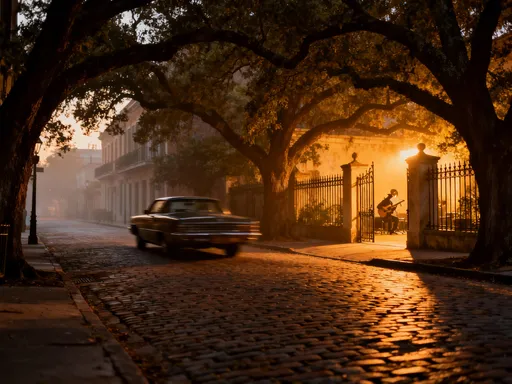
As the sun dips below the rooftops of New Orleans, the city undergoes a gentle transformation. The heat softens, the light turns golden, and public spaces begin to glow—not just from streetlamps, but from candles in courtyards, strings of bulbs over patios, and the flicker of torches along walkways. This is when the city reveals another layer of its soul, and driving becomes a way to move gracefully between these nocturnal scenes.
A sunset drive along Esplanade Ridge offers one of the most beautiful vantage points. The wide boulevard, lined with antebellum mansions and towering oaks, becomes a corridor of light and shadow. You can park near City Park and walk into its perimeter, where families gather for evening strolls, and musicians sometimes play near the entrance. Further east, the Marigny neighborhood comes alive after dark. Washington Square Park, though small, often hosts impromptu gatherings—friends sharing wine, a guitarist playing ballads, children chasing fireflies.
Jackson Square, illuminated by gas lamps and surrounded by artists’ booths, is another nighttime highlight. Arriving by car allows you to park nearby and enter the space without the fatigue of a long walk. You can sit on a bench, listen to a saxophonist’s late set, and watch the interplay of light and shadow on the St. Louis Cathedral. The mood is contemplative, communal, alive with quiet joy. For those who prefer a more relaxed evening, a drive through the Garden District, with its glowing porch lights and fragrant gardens, offers a peaceful alternative to the bustle of Bourbon Street.
Nighttime exploration by car also enhances safety and comfort, particularly for solo travelers or older visitors. Instead of relying on unfamiliar sidewalks or late-night transit, you have a secure base to return to. You can choose your pace, decide how long to stay, and retreat when you’re ready—making the experience not just enjoyable, but sustainable.
Why These Spaces Matter: The Soul of New Orleans Lives Outside
The true essence of New Orleans isn’t found in museums or guidebooks—it lives in the open air, in the shared spaces where music rises from corners, where neighbors greet each other by name, and where history is not behind glass, but woven into the pavement. These public spaces are more than parks and squares; they are the city’s collective heart, beating steadily through floods, storms, and time.
What driving enables is not detachment, but deeper engagement. When you arrive on your own terms, you’re not just passing through—you’re participating. You choose when to linger, where to pause, how to listen. You see the grandmother teaching her granddaughter to dance in Congo Square. You notice the mural in a playground that honors local heroes. You feel the breeze off the bayou as a saxophone echoes across the water. These are not tourist moments; they are human ones.
Moreover, the act of driving reflects a form of respect. It allows you to move like a local—stopping at a corner store for ice cream, parking near a church for a community concert, or taking a back route to avoid congestion during a parade. You’re not following a script; you’re learning the rhythm. And in doing so, you’re invited, however briefly, into the life of the city.
Public spaces in New Orleans are also acts of resilience. After natural disasters and economic challenges, it’s these open areas that have served as shelters, meeting grounds, and stages for renewal. They belong to everyone and to no one—freely accessible, constantly evolving. To experience them is to understand that culture isn’t performed; it’s lived. And when you drive through this city with intention, you’re not just seeing it—you’re feeling it, one shared space at a time.
This journey wasn’t just about miles logged or landmarks checked. It was about moments—sitting on a bench in a quiet square, hearing a saxophone echo across rooftops, realizing you’ve become part of the scene. Driving to New Orleans didn’t just get me there; it let me live there, briefly and beautifully. The road gave me freedom, but the public spaces gave me connection. And that’s the real magic of this city—no matter how you arrive, it invites you in.